· by Michael Blair, Nashville's Air Duct Cleaning
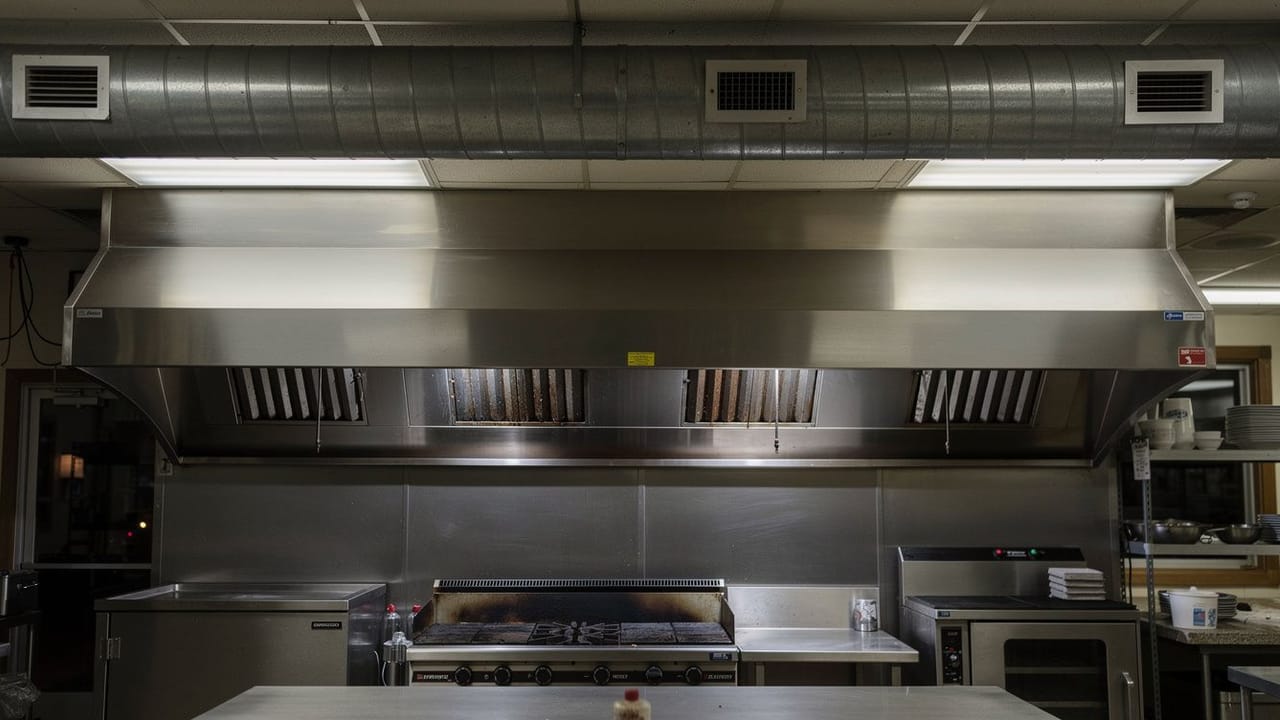
Search for commercial duct cleaning as a restaurant owner and you get two kinds of answers mixed together: offices and apartment buildings on one side, hood cleaning on the other. A restaurant has both systems in the same ceiling. One carries hot, grease-laden air from the cooking line to a fan on the roof. The other moves conditioned air to the dining room and the kitchen and brings it back to the air handler. They are cleaned for different reasons, on different schedules, with different paperwork, and a quote that treats them as one line item usually leaves one of them short. Here is how the two split, what governs the exhaust side, and how we plan commercial duct cleaning for a restaurant so neither gets missed.
Is kitchen exhaust cleaning the same job as commercial duct cleaning?
No, kitchen exhaust cleaning is a separate job from cleaning a building’s heating and cooling ducts, and the reason is fire. The exhaust system, meaning the hood, its filters, the grease duct and the exhaust fan, collects grease vapor every hour the line is cooking, and that grease is fuel sitting in a metal channel above an open flame. The U.S. Fire Administration’s report on restaurant fires, which uses 2002 data and was published in 2004, estimated 7,100 restaurant structure fires that year, found cooking caused about 64 percent of them, and found cooking materials such as grease and oil were the item most often first ignited, at 33 percent.
The same report names NFPA 96 as the standard usually recognized for fire safety in commercial kitchens, covering exhaust and grease removal systems and their maintenance and cleaning. It also describes a 2001 fire in St. Petersburg, Florida, that started in a fryer at a restaurant three months overdue for cleaning its hood and chimney, which caught and fed the flames. The HVAC ducts carry a different load: dust, lint, and in a kitchen, a light film of grease that drifts into the return. That film is worth removing, but it is a housekeeping and air quality question, not a fire-standard schedule.
How often does the hood and grease duct have to be cleaned?
The interval depends on how much cooking the hood sees. The Kansas State Fire Marshal’s fact sheet on hood suppression, which summarizes the inspection and cleaning table in older editions of NFPA 96, says the entire exhaust system is to be inspected and cleaned on this schedule:
The same sheet calls for the system to be serviced at least every six months by a certified firm, says mesh filters are not allowed, calls for a Class K extinguisher, and says records of all inspection, testing and maintenance are to be kept at the facility. That is Kansas’s reading of earlier editions. The edition in force here and any local amendment come from the fire marshal with authority over the building, so a restaurant should confirm its interval with that office before it settles a contract.
- Solid fuel cooking: monthly.
- High-volume cooking, such as 24-hour kitchens, charbroiling or wok cooking: quarterly.
- Moderate-volume cooking: twice a year.
- Low-volume cooking, such as churches, day camps and seasonal businesses: once a year.
Which rules apply to a restaurant in Tennessee?
Tennessee enforces the 2021 International Fire Code and the 2021 International Mechanical Code, according to the Tennessee State Fire Marshal’s list of currently adopted codes, along with the 2021 building and fuel gas codes. That page does not list NFPA 96 by name, so the path to the hood-cleaning requirement runs through the fire code the state adopted and the local fire marshal who enforces it. In Davidson County that is Metro Nashville, and the cities around it have their own offices; our Nashville service page and the other city pages list who handles permits locally.
The home guidance people often find first does not apply to a restaurant at all. The EPA’s page on residential duct cleaning is written for houses, recommends cleaning only as needed rather than routinely, and says the agency does not set duct cleaning standards or certify companies. It is sound advice for a house, and a reasonable way to think about a restaurant’s HVAC ducts, but it says nothing about a grease exhaust system and is no reason to stretch a hood schedule.
Planning both jobs around service
For the HVAC side, we treat a restaurant the way our post on when duct cleaning is actually justified treats a house: inspect first, and clean when there is something to remove. In a kitchen that usually means looking at the returns nearest the line for grease film, the supply registers over the prep area, and the coil and blower, which collect what the filter misses. The dining room ducts on the same system often need far less. We work after closing, isolate the system by zone, and leave a written record of what was cleaned and what we found.
On our commercial and multi-unit duct cleaning jobs, kitchen exhaust is quoted and documented on its own. When both are due, doing them in the same overnight window saves a second closure, but they stay two line items with two records, because the exhaust record is the one a fire inspector asks to see. If your hood schedule and your HVAC ducts have never been looked at side by side, ask us for a free estimate and we will walk both systems and tell you what each one needs.
Sources
- U.S. Fire Administration, Restaurant Fires, Topical Fire Research Series vol. 4 issue 3 (October 2004, 2002 data) — Estimated 7,100 restaurant structure fires in 2002; about 64 percent caused by cooking; grease and oil most often first ignited (33 percent); NFPA 96 as the governing kitchen standard; the 2001 St. Petersburg fire at a restaurant overdue for hood cleaning.
- Kansas Office of the State Fire Marshal, Fire Fact 066: Hood Suppression — Kansas’s summary of the NFPA 96 inspection and cleaning table (older editions): monthly, quarterly, semiannual and annual intervals by cooking volume; service every six months by a certified firm; no mesh filters; Class K extinguisher; records kept at the facility.
- Tennessee State Fire Marshal’s Office, Currently Adopted Codes — Tennessee adopts the 2021 International Fire Code, International Mechanical Code, International Building Code and International Fuel Gas Code.
- U.S. EPA, Should You Have the Air Ducts in Your Home Cleaned? — Home guidance: clean as needed, not routinely; EPA does not set duct cleaning standards or certify companies; does not address commercial kitchens.
FAQ
Commercial Duct Cleaning: Kitchen Exhaust vs. HVAC — questions
What is the difference between commercial duct cleaning and kitchen exhaust cleaning?
Commercial duct cleaning usually means the heating and cooling ducts that move conditioned air through a building. Kitchen exhaust cleaning covers the hood, filters, grease duct and roof fan above a cooking line. The exhaust side holds grease that can burn, so it runs on a fire-standard schedule, while HVAC ducts are cleaned when an inspection shows buildup.
How often does a restaurant kitchen exhaust system need cleaning?
It depends on cooking volume. Kansas’s summary of older NFPA 96 editions lists monthly for solid fuel, quarterly for high-volume cooking such as charbroiling, wok or 24-hour kitchens, twice a year for moderate volume, and once a year for low volume such as churches or seasonal businesses. Confirm the current edition and local rules with your fire marshal.
Should a restaurant clean the HVAC ducts and the kitchen exhaust on the same visit?
It can, and doing both in one overnight window saves a second closure. They should still be scoped, priced and documented as two jobs, because the exhaust follows a fire-standard schedule and its record is what an inspector asks for. The HVAC ducts are cleaned only when an inspection finds grease film, dust or mold to remove.
What records should a restaurant keep after exhaust cleaning?
Kansas’s fire marshal summary of NFPA 96 says documentation of all inspection, testing and maintenance is kept at the facility for review. In practice that means the date, what was cleaned, the condition found and who did it, kept on site where an inspector can see it. Ask your local fire marshal whether anything more is required.
Is duct cleaning necessary in a commercial building?
The heating and cooling ducts in an office or apartment building have no fixed cleaning calendar; they are worth cleaning when an inspection finds heavy dust, debris, mold or pests. A restaurant’s kitchen exhaust is different, because the fire standard sets an interval by cooking volume and grease left in the duct is a fire risk.