· by Michael Blair, Nashville's Air Duct Cleaning
The ducts get cleaned, the registers look new, and a few days later there is a gray film on the dark furniture again. That is one of the most common reasons people search for air duct dust removal, and the honest answer is that the ducts were rarely where the dust lived. The EPA's guidance on duct cleaning says studies have not shown that dirty ducts raise the dust level in a home, because most of the dirt in a duct sticks to its walls instead of blowing into the rooms. So when dust returns, the useful question is where the air is picking it up before or after it passes through the system. In Middle Tennessee houses, with ductwork run through vented crawl spaces and hot attics, there are three usual places to look, and none of them is fixed by brushing the inside of a duct. Here is how we trace them before anyone sells you a second air duct cleaning.
Air that goes around the filter instead of through it
A filter only cleans the air that passes through it. If the filter slot has a gap at one edge, if the return grille frame does not close tight against the filter, or if the filter is a size smaller than its track, air takes the open path and carries everything with it straight to the coil and the blower. The EPA lists this among its prevention steps for keeping ducts clean: make sure no filter is missing and that air cannot bypass the filter through gaps around the holder. A system running with an unfiltered leak at the cabinet will dust a freshly cleaned house quickly, no matter how good the filter itself is.
This is the first thing we check, and it is the cheapest to fix. We pull the filter, look at its edges for a dirt line that shows air was getting around it, and look at the track and the cabinet door for openings. A filter slot in a hall ceiling or a closet wall can be sealed with a proper gasket or a corrected frame. The rating of the filter matters less than how it seats; our post on choosing an HVAC filter covers what a system can carry without choking it. The EPA also points out the plain part: change the filter on a schedule, and sooner when it is visibly loaded.
Return ducts pulling from the attic or the crawl space
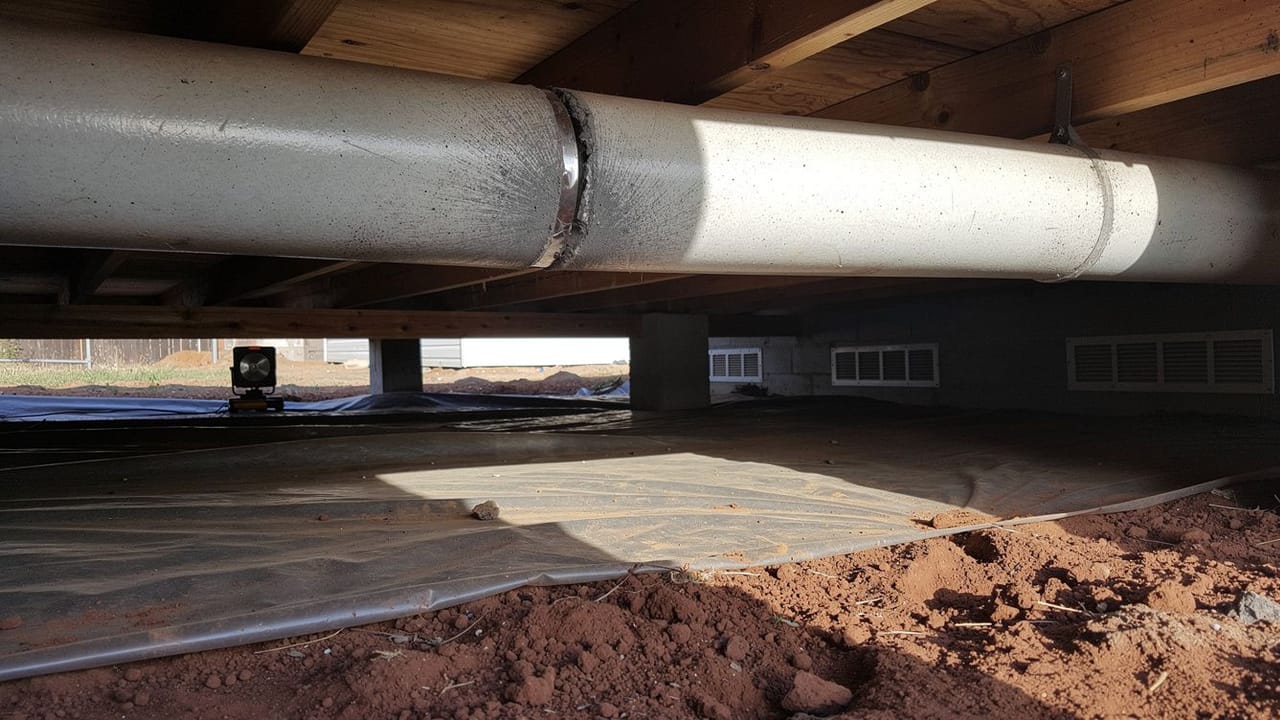
The supply side of a system is under pressure, so a leak there pushes conditioned air out. The return side is under suction, so a leak there pulls air in, and whatever surrounds the duct comes in with it. The Department of Energy's Building America checklist for duct sealing names what a leaky return in an unconditioned space draws in: hot or cold air, dust, pollen, moisture, soil gases and pests. In a house where the return trunk crosses a vented crawl space, that means crawl space dust and soil. In a house where it runs through the attic, it means insulation fibers and the fine dust that settles on top of them. Where the filter sits at the return grille, anything that leaks into the duct behind it reaches the blower and the rooms without being filtered.
Middle Tennessee sits in the mixed-humid climate, and the Oak Ridge National Laboratory report on duct retrofits in that climate is about this exact problem: it reports case studies of duct retrofits in ten houses and draws guidelines for sealing attic and crawl space ducts from work with the HVAC industry in East Tennessee, northern Georgia and south-central Kentucky. When we suspect return leakage, we go under the house or into the attic and follow the return from the grille to the air handler, looking at the panned joist cavities, the boots, the flex connections and the plenum joints. Dust streaks at a seam and dark lines in insulation are the marks of air being pulled through. The fix is sealing, not cleaning, and the energy side of it is covered in our post on why leaky ducts cost more than dirty ones.
Dust that starts in the house
Not all of it comes through the system. The EPA notes that dirty ducts are only one of many sources of particles in a home, and that outdoor air, cooking, cleaning, smoking or just moving around the house can mean more exposure than the ducts ever cause. Its page on indoor particulate matter adds that indoor particle levels depend on the outdoor level, how much air leaks into the house, the ventilation and filtration, the sources inside, and what the people in the house are doing. Pets, a range without a hood vented outside, a fireplace, fabric-heavy rooms and windows open on a dry day all add to what lands on the furniture.
Two of those are worth acting on directly. The EPA suggests running an exhaust fan vented to the outside when cooking, and changing the filters on the central system and any room air cleaner on the maker's schedule. If a renovation is under way, its advice is to seal the supply and return registers during dusty work and not run the system until the dust is cleaned up; our post on duct cleaning after a renovation goes through that case. A system that runs while drywall is being sanded will spread that dust through every room, and a duct cleaning afterward only addresses part of it.
What removes it for good, and what to ask before paying again
The order matters. First the filter fits and seals. Then the return side is checked for leaks in the attic or crawl space and sealed where it is open. Then, if the inspection shows debris in the ducts or the air handler, they get cleaned, coils and blower included. Doing the cleaning first and the sealing never means paying to clean a system that starts loading up again the day the crew leaves. The EPA does not treat duct cleaning as routine yearly maintenance; it puts filter changes, cleaning of the coils and drain pans, and a yearly inspection in that role.
Sealing done right is measurable. The Building America checklist calls for a duct leakage test before and after sealing, to RESNET or ACCA Standard 5 methods, with a target of 10 percent or less of the system's total airflow, and it calls for UL-approved mastic or UL 181 tape on the joints, not ordinary cloth duct tape. It also asks for the boots in unconditioned spaces to be sealed to the ceiling or floor around them, which is where a lot of crawl space dust finds its way in. If a company offers to spray a sealant or encapsulant inside the ducts to stop dust, know that the EPA says neither it nor NADCA, NAIMA or SMACNA recommends those coatings as a routine step, and that they are a different thing from sealing the outside of the duct against leaks.
If you are in Nashville or the towns around it and the dust came back after a cleaning, these are the questions we would ask any company, including us, before more work is done:
- Did anyone check whether air was getting around the filter at the slot or the cabinet?
- Were the return ducts in the attic or crawl space inspected for open joints and loose boots?
- Will the leakage be tested before and after sealing, and to what standard?
- Were the coil, blower and drain pan cleaned, or only the duct runs?
- Is anything going to be sprayed inside the ducts, and why?
Sources
- U.S. EPA, Should You Have the Air Ducts in Your Home Cleaned? — Duct dirt mostly adheres to duct surfaces; ducts are one of many particle sources; prevent filter bypass; seal registers during renovation dust; duct cleaning is not routine yearly maintenance; EPA, NADCA, NAIMA and SMACNA do not recommend routine sealants.
- U.S. EPA, Indoor Particulate Matter — Indoor particle levels depend on outdoor levels, infiltration, ventilation, filtration, indoor sources and activities; vent cooking exhaust outside; change system filters on schedule.
- U.S. DOE Building America Solution Center (PNNL), Duct Sealing and Insulation checklist — Leaky returns in unconditioned spaces draw in dust, pollen, moisture, soil gases and pests; test leakage before and after sealing (RESNET or ACCA Standard 5), target 10 percent or less; UL-approved mastic or UL 181 tape; seal boots to finished surfaces.
- Oak Ridge National Laboratory, Case Studies of Duct Retrofits and Guidelines for Attic and Crawl Space Duct Sealing (DOE OSTI) — Report abstract: duct retrofit case studies in ten mixed-humid climate houses; attic and crawl space duct sealing guidelines drawn from work with the HVAC industry in East Tennessee, northern Georgia and south-central Kentucky.