
· by Michael Blair, Nashville's Air Duct Cleaning
Most of the time, the case for cleaning residential ductwork is weak, and the honest answer to a homeowner asking about it is that a good filter and sealed ducts matter more. A renovation is the exception. Sanding drywall, cutting lumber, blowing insulation and demolishing plaster all produce fine dust in quantities the house has never seen, and if the system ran during the work, or the registers were open while it happened, the ducts are full of it. The same is true of many new houses on the day the owners move in.
How the dust gets in
Return grilles pull air from the rooms, and during a renovation that air carries drywall dust, which is fine enough to pass through an ordinary filter and settle in the return trunk, the blower compartment and the evaporator coil. Supply registers left uncovered on a floor being sanded fill with sawdust from the top. Rooms with the ducts open, before the registers are installed, take everything that falls in. On a new build, the ducts may have been open for weeks while the drywall crew worked.
The result is a system that delivers a haze of dust for weeks after the work is done, a filter that clogs in days, and, on the coil, a coating that cuts airflow and cooling. The dust also carries the smell of the job, and a house that still smells of new drywall months later is often breathing it out of the ducts.
What to check before hiring anyone
Pull a supply register and look inside with a flashlight. If there is a visible layer of dust, chips or insulation in the duct, cleaning is justified. Look at the filter; if it has loaded up in days, the return side is full. Look at the evaporator coil if it is accessible, or ask the HVAC technician to; a coil furred with drywall dust has to be cleaned regardless of what is done with the ducts, and it is a different job.
If the registers are clean and the filter is lasting normally, the ducts probably do not need it, whatever the contractor doing the renovation suggests.
- Visible dust or debris inside supply ducts: clean them
- Filter loading in days: the return side needs it too
- Coil coated: an HVAC coil cleaning, separate from the ducts
- Registers clean, filter normal: probably not needed
What a proper cleaning involves
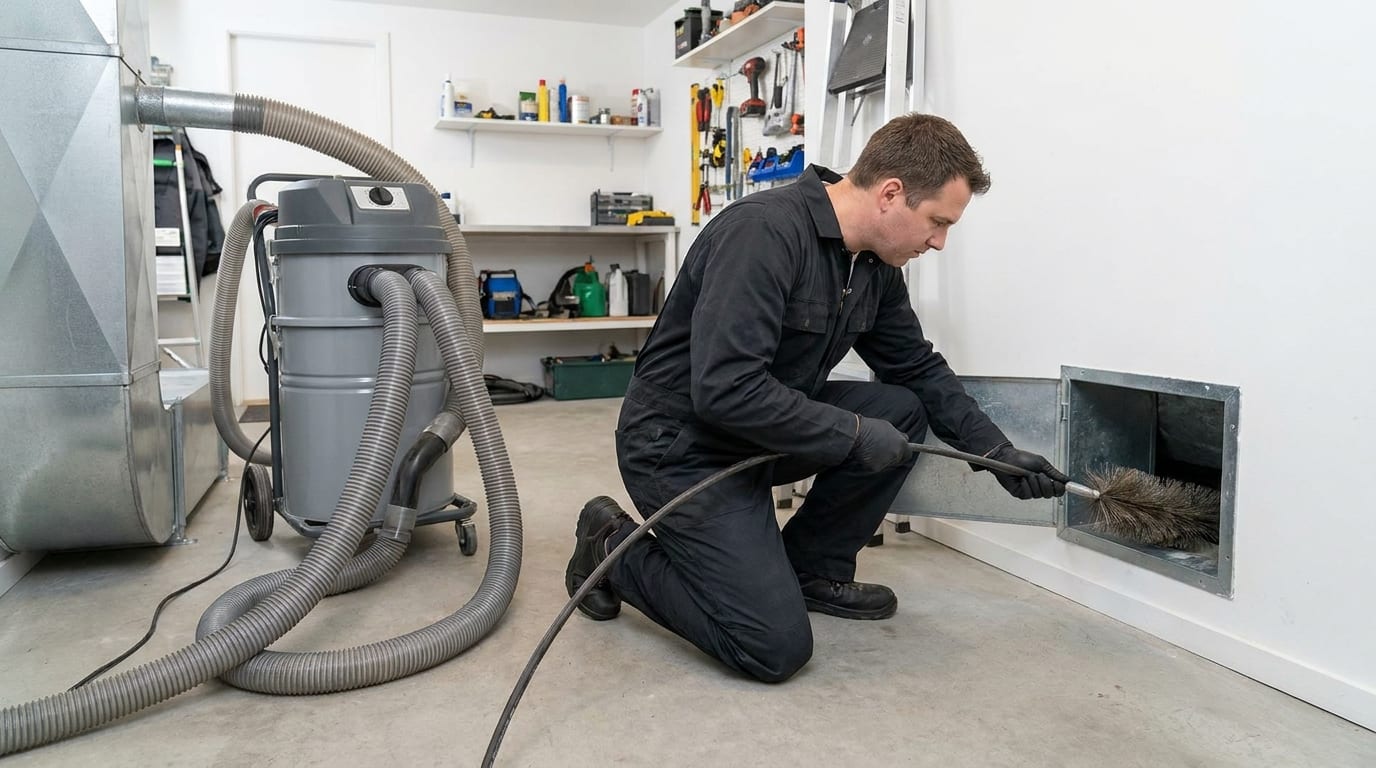
The system is put under negative pressure with a large vacuum connected to the trunk line, so anything loosened goes into the vacuum rather than the house. Each run is then agitated with air whips, brushes or compressed air from the register end toward the trunk, and the trunks are cleaned last. The blower compartment, the return plenum and the supply plenum are included, and the coil is cleaned or the HVAC company is brought in for it. The registers come off and get washed. Every access hole cut in the ductwork is sealed afterward.
A company that shows up with a shop vacuum and a brush, quotes by the vent at a price that seems too low, or wants to fog the ducts with a sanitizer is not doing this. Ask about the vacuum, whether they use source-removal methods, whether they clean the plenums and the blower, and whether they seal the access points. The trade association for the industry sets a standard for this, and a company that follows it can say so.
Preventing it next time
On the next renovation, cover every register and return with plastic and tape before the dust starts, and keep the system off during dusty phases. If the house needs heating or cooling while the work goes on, run it with a high-efficiency filter changed frequently and the returns in the work area sealed. Hang plastic barriers between the work and the rest of the house. On a new build, ask the builder when the registers were installed and whether the ducts were covered; the answer tells you whether to look inside them before moving in.
After the cleaning, replace the filter, run the system with the windows open for a few hours, and change the filter again a week later. The first cycle after cleaning shakes out what was missed.