· by Michael Blair, Nashville's Air Duct Cleaning
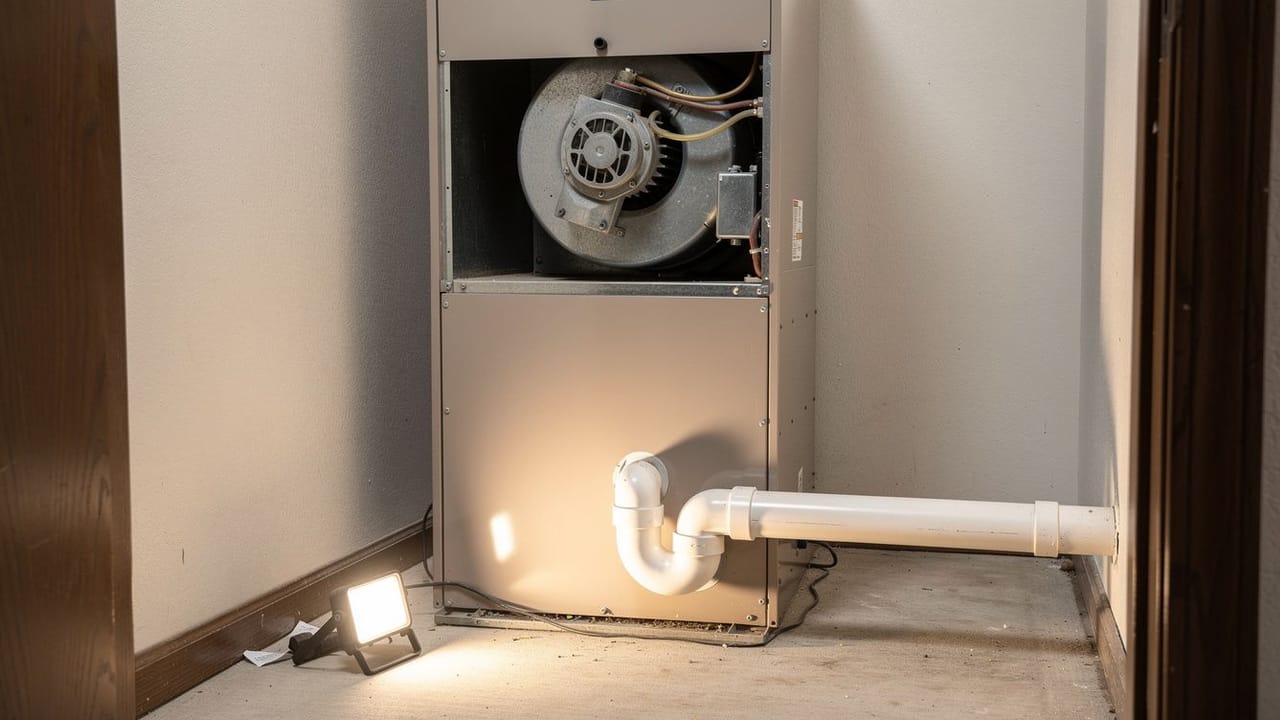
When people search for HVAC cleaning they usually picture the ducts, the long runs to every room. The parts that actually change how the system runs sit in one cabinet: the air handler, with the evaporator coil, the blower wheel, the drain pan and its condensate line, and the return plenum the air passes through on the way in. In a Middle Tennessee house that cabinet is wet for most of the year, because the coil pulls water out of humid air from May into October, and dust that lands on a wet surface stays there. This is what each of those parts does when it is dirty, how our crews clean it, and what a whole-system job should include before anyone quotes you for the ducts alone.
The evaporator coil
The coil is the cold part of the system, a block of copper or aluminum tubing wrapped in thin fins, and every bit of air in the house passes through those fins. Dust that gets past the filter lands on the wet face of the coil and sticks, and over a few seasons it forms a felt that air has to push through. ENERGY STAR's maintenance checklist puts the result plainly: a dirty coil reduces the system's ability to cool the house and makes it run longer. The Department of Energy's Home Cooling 101 guide says to check the evaporator coil every year and clean it as necessary.
Cleaning a coil is not spraying a can of foam on it. We open the cabinet, look at both faces of the coil with a light, brush or vacuum the loose matting off the entering side first, then wet clean it with a coil cleaner and rinse it so the dirt goes down into the pan and out the drain rather than deeper into the fins. Fins that are folded over get combed straight. The EPA's page on duct cleaning makes the point that matters for anyone deciding where to spend: cleaning dirty cooling coils, fans and heat exchangers can improve a system's efficiency, where cleaning only the ducts has little evidence behind it.
The blower wheel
The blower is a drum of curved blades, often called the squirrel cage, that moves all of the air. Each blade has a shallow cup on its face, and that cup is where dust packs in. As it fills, the blade loses its shape, the wheel moves less air at the same speed, and the system sounds the same while it delivers less to the rooms at the end of the longest runs. A loaded wheel can also throw off its balance and start to hum or rattle.
A wheel cannot be cleaned properly through the access panel. The blower assembly comes out of the cabinet, the wheel is cleaned blade by blade and washed, the housing is cleaned, and everything goes back in with the wiring checked. That is what ENERGY STAR means by cleaning and adjusting blower components to provide proper airflow, and it is the core of our coil and blower cleaning work. A duct cleaning that leaves the blower in place leaves the dirtiest moving part in the system untouched.
The drain pan and condensate line
Under the coil sits a pan that catches the water it pulls from the air, and a line, usually white PVC with a trap, that carries the water outside or to a drain. In a humid summer that is a steady flow, and a warm, dark, wet pan is where slime and growth start. Trane's overflow switch guide names the causes: dirt, debris and mold growth clog the drain line or the pan. When that happens the water has nowhere to go. In an attic air handler it fills the secondary pan and comes through the ceiling drywall below; in a crawl space it soaks the insulation and the floor framing; in a closet it runs across the floor.
If the system has an overflow switch, it does its job by shutting the system down. Trane describes the switch cutting power to the compressor, the condenser fan and the supply fan, which is why a clogged drain on a July afternoon looks like a dead air conditioner. Our crews clean the pan, flush the line and the trap, clear the outlet, and check the pan and line for cracks. The DOE guide suggests passing a stiff wire through the drain channels now and then to keep them clear, which is a fair thing for a homeowner to do between visits. If the pan has been overflowing for a while, our post on mold in an HVAC system covers what to look for around it.
The return plenum, and what a whole-system job includes
The return plenum is the box where the return air gathers before it enters the air handler. In many Nashville houses it is built of duct board, or lined with fiberglass, or in an older house it is a panned-over platform in the crawl space. It is under suction, so it collects whatever the return grilles pull in, and because it sits right next to the wet coil it is the most likely place for liner to get damp. The EPA is direct about that material: wet or moldy duct insulation cannot be effectively cleaned and should be removed and replaced. A plenum lined with moldy fiberglass gets rebuilt, not sprayed.
NADCA, the duct cleaning trade association, sets the scope in ACR, The NADCA Standard (2021 Edition). Its air handler inspection takes in the heating and cooling coils, the condensate pans, the condensate drain lines, and the fans and fan compartments; its return-side inspection takes in the return ducts and the return plenums. It recommends that coils, fans, condensate pans and drains be wet cleaned along with mechanical methods, and that porous materials with mold growth be removed and replaced. A quote that covers the supply and return runs and stops at the air handler is a duct job, which is sometimes the right one; our post on when duct cleaning is actually justified goes through that. A system cleaning goes inside the cabinet.
- Evaporator coil: inspected on both faces, wet cleaned, fins combed
- Blower: wheel and housing removed and cleaned
- Drain pan and condensate line: cleaned, flushed, checked for cracks
- Return plenum: cleaned, or rebuilt if the liner is wet or moldy
- Supply and return ducts: cleaned when the inspection shows they need it
Sources
- NADCA, ACR: The NADCA Standard (2021 Edition) — Air handler and return-side inspection scope (1.7.1, 1.7.3); wet cleaning of coils, fans, pans and drains (4.6); removal of porous materials with mold growth (4.16).
- U.S. EPA, Should You Have the Air Ducts in Your Home Cleaned? — Cleaning coils, fans and heat exchangers can improve efficiency; wet or moldy duct insulation should be removed and replaced.
- ENERGY STAR, Maintenance Checklist — Dirty coils reduce cooling and lengthen run time; clean and adjust blower components for proper airflow.
- U.S. Department of Energy, Home Cooling 101 — Check the evaporator coil yearly and clean as necessary; keep drain channels clear.
- Trane, Air Handler Overflow Switch Troubleshooting — Drain line and pan clog with dirt, debris and mold growth; the overflow switch shuts down the compressor, condenser fan and supply fan.