
· by Michael Blair, Nashville's Air Duct Cleaning
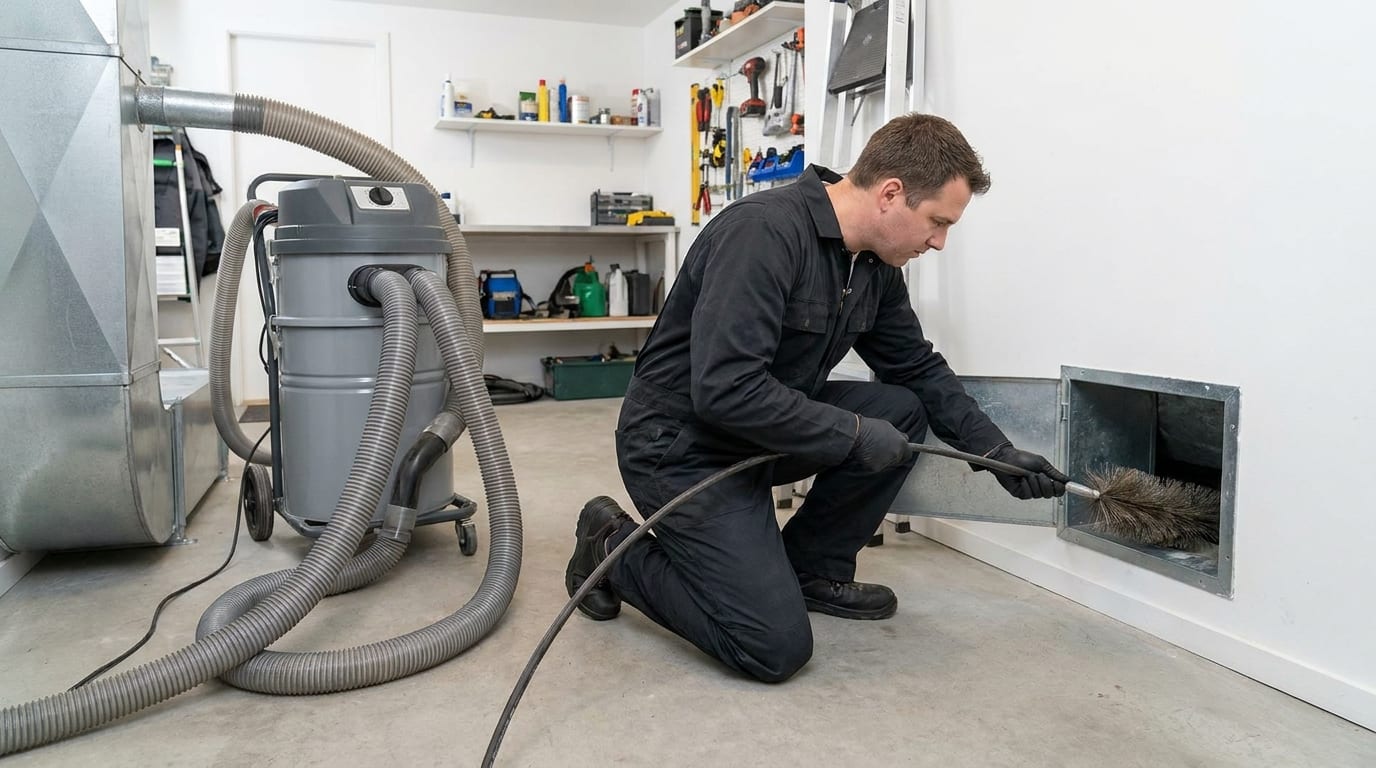
Dryer vents accumulate lint, restrict airflow and are a recognized cause of house fires. They are also the duct most homeowners never think about.
The signs
Clothes taking more than one cycle to dry. The dryer or the laundry room getting unusually hot. A burning smell. The exterior flap not opening fully when running.
Longer drying times are the earliest and most reliable indicator, and they also mean you are paying for the restriction.
What causes build-up faster
Long runs, multiple bends, and flexible foil or plastic ducting which catches lint at every ridge. Rigid smooth-wall metal is what should be used.
A crushed duct behind the dryer, from pushing the appliance back against the wall, is extremely common.
- Rigid smooth-wall metal duct, not foil or plastic
- Keep the run short with as few bends as possible
- Clean annually, more with heavy use or a long run
- Check the exterior flap opens fully when running
- Never vent a dryer into a crawl space or attic
Never vent inside
A dryer vented into a crawl space, attic or garage discharges a large volume of warm moist air into the building, which in Middle Tennessee humidity causes exactly the problems you would expect.
It also puts lint into the space. It must terminate outside, with a flap that opens.
How often
Annually for a typical household, more often with a large family, a long duct run or a dryer that vents through the roof.
It is one of the cheapest pieces of home maintenance with a genuine safety component, and it also shortens drying times immediately.